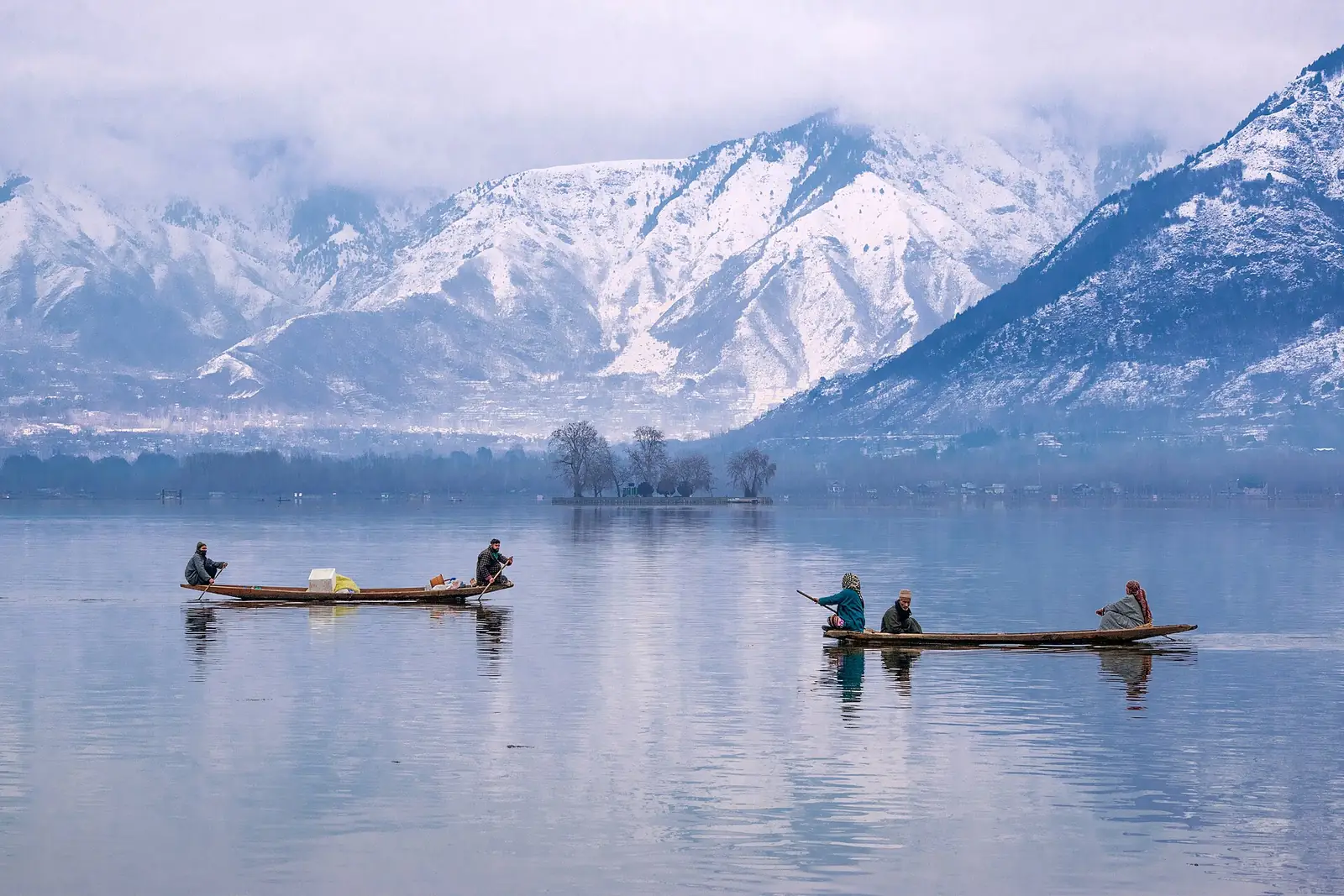
Most Kashmir holidays begin in Srinagar, and many visitors fall for it almost at once. Dal Lake sits right in the city with the Zabarwan hills behind it.
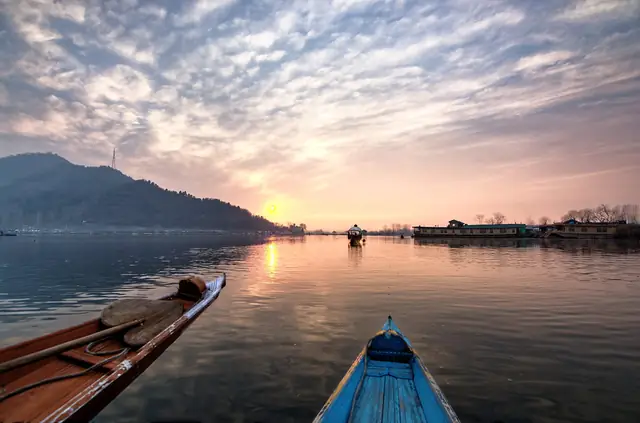
Shikaras move slowly past floating gardens, and old cedar-wood houseboats line the shore with their verandas facing the water. Mornings are often quiet and misty. In the evening the lake fills with soft light and the call to prayer carries across it.
Away from the water, Srinagar has terraced Mughal gardens, the white marble Hazratbal shrine on the lake's northern shore, and an old city of historic wooden shrines and mosques, narrow lanes and craft workshops. Spend at least two days here before heading out to Gulmarg, Sonamarg or Pahalgam. It gives you time to settle in and see the city at a relaxed pace, and our team at Roaming Routes can plan the whole route for you.
What to see and do.
Take a shikara ride on Dal Lake at sunrise or sunset, past floating gardens, lotus beds in summer, and small boats selling flowers, kahwa and handicrafts.
Spend a night or two on a traditional houseboat on Dal or Nigeen Lake, with carved walnut-wood interiors and tea on the front deck.
Walk the terraced lawns, fountains and chinar trees of Nishat Bagh, which looks out across Dal Lake, with the Pir Panjal range in view on clear days.
Visit Shalimar Bagh, the Mughal garden laid out in Emperor Jahangir's time, and the smaller Chashme Shahi, built around a natural freshwater spring.
Pay a respectful visit to the Hazratbal shrine, a white marble mosque on the northern shore of Dal Lake and an important place of worship for Kashmiris.
Explore the old city, including the Jamia Masjid with its wooden pillars and the Khanqah-e-Moula (Shah-e-Hamadan) on the banks of the Jhelum.
Watch Kashmiri crafts being made, such as papier-mache, walnut-wood carving, carpets and Pashmina. Buy from reputable shops and ask for certified products, such as GI-tagged Pashmina.
From the valley
Local tips.
What we tell our own guests before they head to Srinagar.
Agree on the shikara route and duration before you set off, and ask to see the officially displayed rates at the ghat. Rates change, so check what is current.
Most Mughal gardens charge a small entry fee and have set visiting hours, so check current timings and rates before you go.
Dress modestly at Hazratbal and other shrines, and follow the rules posted at each one, including any limits on access to inner areas. Carry a scarf so you can cover your head if asked.
Prepaid SIM cards from outside Jammu & Kashmir generally do not work here, though postpaid connections usually do. Rules can change, so check with your mobile operator before you travel.
Pack a warm layer even in summer, because evenings on the lake can get cool. Pack heavy woollens from late autumn to early spring.
Trips
10 trips go to Srinagar.
From ₹7,999 per person · twin sharing. Every plan can be changed to suit your dates, and the final price is confirmed in writing.
Prices shown are starting prices, per person on twin sharing unless marked per couple or per group. Your final quote depends on travel dates, hotel category, vehicle and group size.
Good to know
Srinagar, answered.
Anything else? WhatsApp us: a real person from the Batakote office will answer.
Two to three days is comfortable. That gives you time for a shikara ride, a houseboat stay, the Mughal gardens, Hazratbal and the old city without rushing. Many families then use Srinagar as a base for day trips to Gulmarg, Sonamarg or Doodhpathri.
Should we stay on a houseboat or in a hotel?
Many guests do both: one or two nights on a houseboat for the experience, then a hotel for the rest of the trip. Houseboats vary a lot in comfort, so book with a registered operator and check the room type, heating and bathroom facilities. We can help you choose one that suits your family.
Do we need special local taxis for sightseeing around Srinagar?
Within Srinagar, your tour vehicle can take you to the lake, the gardens and the old city. Some places outside the city use local union taxis or ponies for sightseeing. These include Gulmarg, Sonamarg (for example, the Thajiwas glacier area) and Pahalgam's Aru, Betaab Valley and Chandanwari. Rates and rules change, so check what is current when you get there.

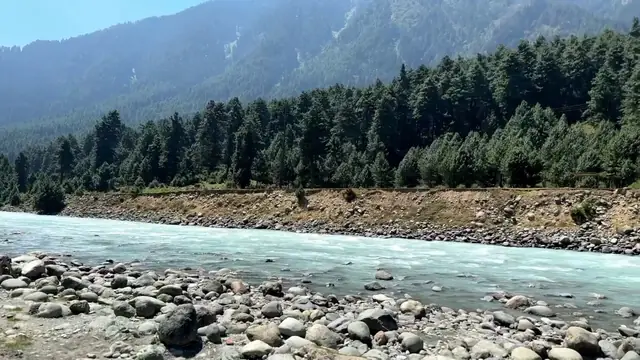 4 days · 3 nights
Srinagar · Pahalgam · Aru Valley · Betaab Valley · Chandanwari
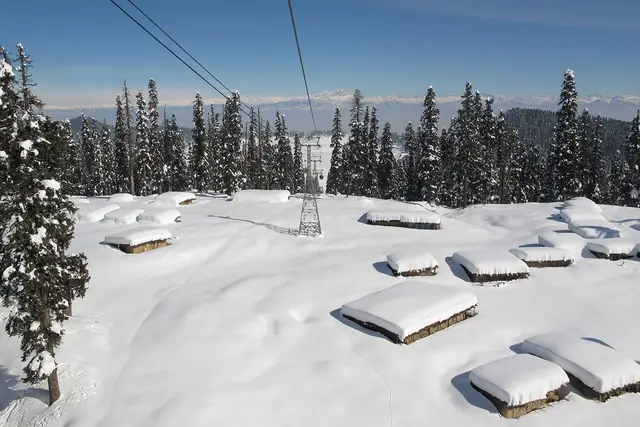 5 days · 4 nights
Srinagar · Gulmarg · Pahalgam
 5 days · 4 nights
Srinagar · Gulmarg · Pahalgam
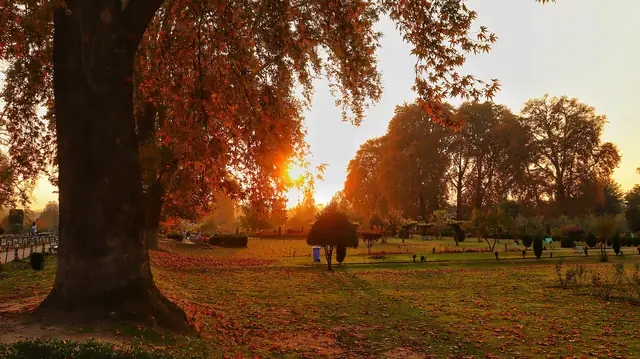 6 days · 5 nights
Srinagar · Gulmarg · Pahalgam · Sonamarg
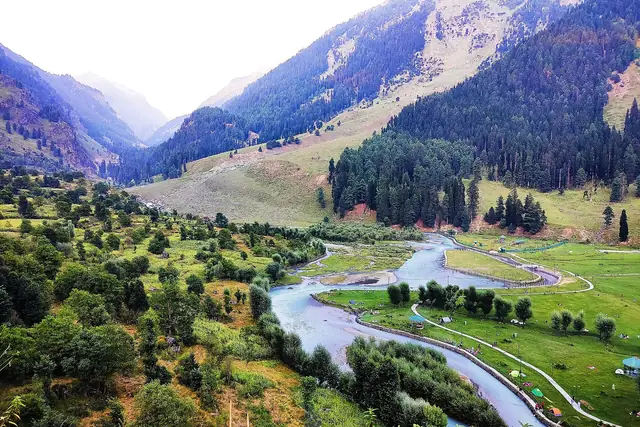 7 days · 6 nights
Srinagar · Gulmarg · Pahalgam · Sonamarg
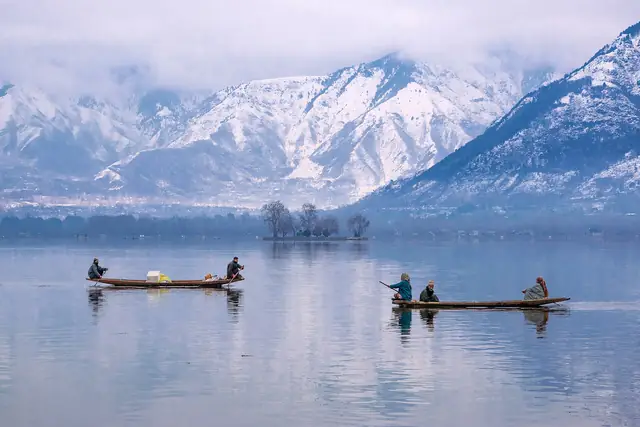 3 days · 2 nights
Srinagar
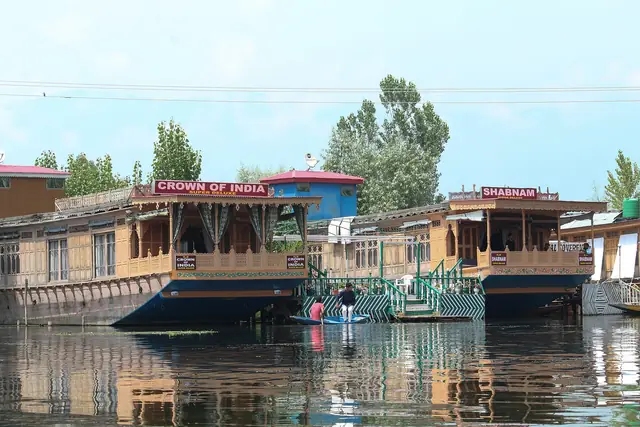 4 days · 3 nights
Srinagar
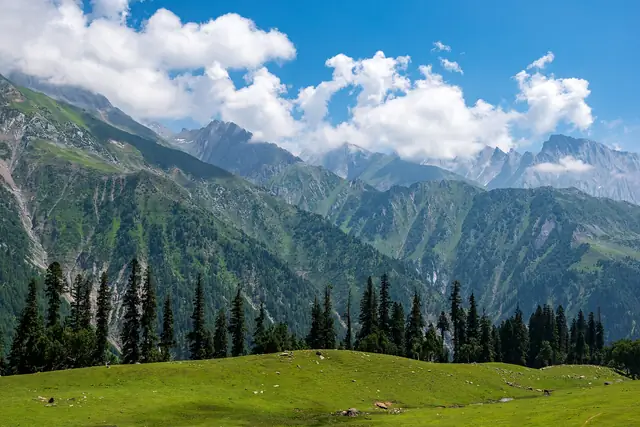 5 days · 4 nights
Srinagar · Gulmarg · Sonamarg
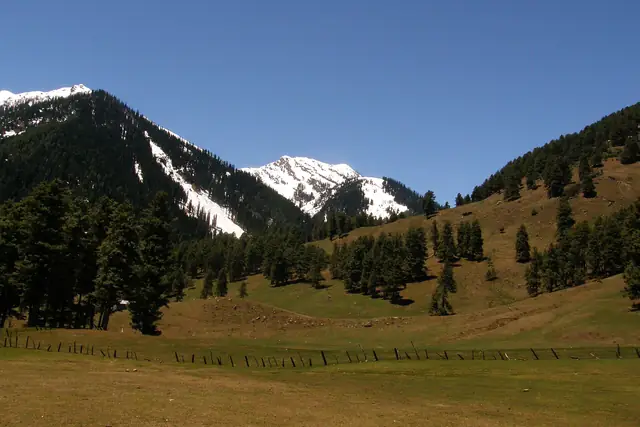 5 days · 4 nights
Srinagar · Doodhpathri · Pahalgam
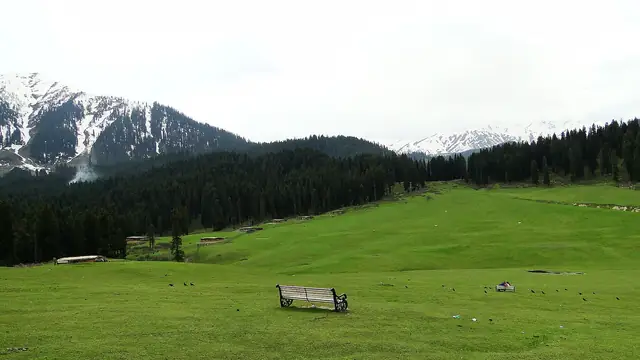 7 days · 6 nights
Srinagar · Gulmarg · Sonamarg · Pahalgam · Doodhpathri
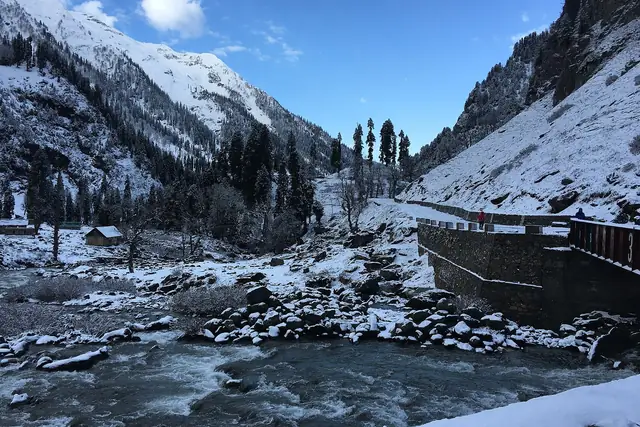 ChandanwariSnow bridge, pine forest and the start of the Amarnath trail